 Is Now Vyapar TaxOne | Same Trust, New Name!
 AI Weapon for Financial Soldiers
Vyapar TaxOne


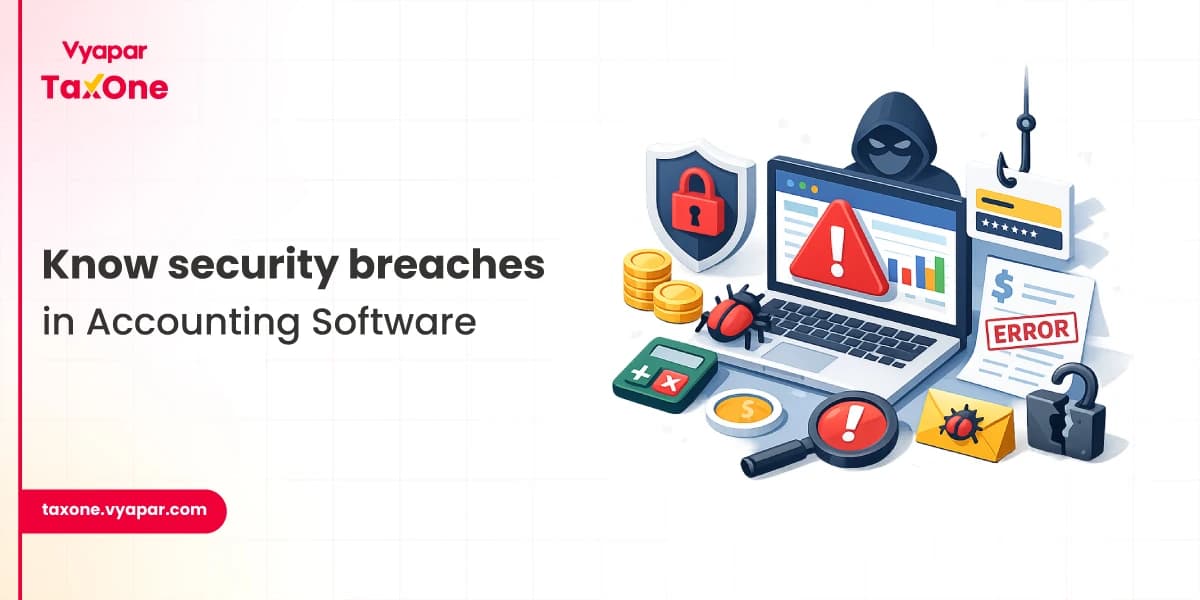
Accounting software security is one of the most important factors to evaluate when choosing a financial management platform. Modern accounting systems handle highly sensitive data, including bank details, invoices, tax records, client information, payroll data, and transaction histories.
If this information is exposed, altered, or lost, the consequences can include financial losses, compliance issues, operational disruption, and damage to client trust.
That is why accounting software security should never be treated as a secondary feature. A secure accounting system helps businesses protect financial data, control user access, prevent unauthorised actions, and recover information quickly if something goes wrong.
In this blog, we explain why accounting software security matters, what features define a secure accounting platform, and which practical steps help accountants, CAs, and businesses keep financial data protected.
Choosing accounting software is not only about speed, automation, or convenience. It is also about how well the platform protects your financial data in real business conditions.
Today's accounting teams work across multiple devices, users, and locations. That creates more flexibility, but it also increases risk. Sensitive information may be exposed through weak passwords, excessive user access, unsecured approvals, phishing attacks, ransomware, or poor backup practices.
A secure accounting platform should help you reduce these risks from the start. Instead of relying only on manual controls, businesses should look for software that has built-in safeguards such as role-based access, approval workflows, encryption, audit tracking, and backup support.
Before choosing any accounting system, ask these questions:
The right accounting software should make your team more efficient while also helping you reduce financial and operational risk.
Using reliable and secure accounting software is one of the most effective ways to protect business and client data. A good system does much more than record transactions. It helps you safeguard information, manage approvals, and maintain visibility over who can access what.
Accounting software security is important because financial records are among the most sensitive assets in any business. If unauthorised users gain access to this data, the result can include fraud, payment misuse, data leaks, and disruption to daily accounting operations.
Secure accounting software helps reduce these risks by:
Businesses should remember that protecting accounting data also means protecting client trust. When firms handle GST data, ledgers, banking information, and business records, strong software security becomes essential for both reputation and continuity.
When evaluating accounting software security, focus on the features that directly reduce risk and improve control over financial data.
A user hierarchy helps define which team members can access specific modules, records, or reports. Role-Based Access Control reduces the chance of unnecessary access to sensitive information such as statements, client data, payment records, or high-level financial summaries.
Workflow rules help businesses standardise how accounting actions are performed. They can be used to control how data is entered, reviewed, approved, and processed. This improves consistency and reduces the risk of bypassing internal financial controls.
User permissions make it possible to decide exactly what each person is allowed to do inside the software. This includes viewing records, editing entries, approving actions, exporting data, or accessing selected accounting functions.
Sensitive communication should be protected, especially when accounting documents, approvals, or attachments are being shared. Secure communication features help reduce the risk of exposure through uncontrolled access or unsecured sharing practices.
Two-step verification adds another layer of protection during login or while performing high-risk actions. This is especially useful when users are reviewing statements, approving payments, or accessing confidential accounting information.
Encryption helps protect financial data while it is being stored and transferred. This makes it harder for unauthorised parties to misuse sensitive information.
Regular backups are a critical part of accounting software security. Backup and restore capabilities help businesses recover quickly after accidental deletion, operational errors, or cyber incidents.
A secure accounting system should make it easy to review actions taken inside the platform. Visibility into who accessed data, what was changed, and when approvals happened improves accountability and supports internal control.
Vyapar TaxOne is designed to help businesses, accountants, and CAs manage accounting processes with stronger control over data access and security.
Vyapar TaxOne has several security-focused capabilities, including:
These features are important because accounting software security depends on both technology and process control. Businesses need to know who can access financial data, who can approve sensitive actions, and how information is protected if a system issue or data loss event occurs.
Vyapar TaxOne also has backup protection to help maintain access to important business data. For accounting teams, this kind of support is important because uninterrupted access to records can directly affect operations, reporting timelines, and client service.
When comparing accounting platforms, businesses should look for software that combines usability with clear security controls. The best solution is one that helps your team work efficiently while also protecting data through permission management, stronger authentication, encryption, and recovery support.
Even the most secure accounting software can be weakened by poor day-to-day habits. That is why businesses should combine secure software with strong internal practices.
Follow these best practices to improve accounting software security:
Accounting software security is not a one-time setup. It is an ongoing process that depends on software features, user discipline, and clear internal controls.
To build safer and more efficient workflows, teams should understand what automation in accounting is and where it reduces manual risk.
Weak accounting software security can create serious financial and operational risks for firms and businesses. These risks often go beyond data loss and can affect business continuity, compliance, and client relationships.
Some of the most common risks include:
Understanding these risks makes it easier to evaluate whether your current accounting platform is truly secure enough for your needs.
Accounting software security refers to the controls, features, and processes used to protect financial data from unauthorised access, misuse, loss, and cyber threats.
It helps protect highly sensitive business and client information, reduces the risk of fraud, improves control over financial processes, and supports business continuity.
Important features include user roles, permissions, two-step verification, encryption, audit visibility, workflow controls, and regular backups.
Yes, cloud accounting software can be secure when it includes strong authentication, encryption, backup protection, and controlled access. Security also depends on how well the business manages users and processes.
Start by enabling multi-factor authentication, reviewing user permissions, creating approval rules, monitoring access, and ensuring that backup and recovery processes are in place.

Tax Professional & Business Finance Expert
Tax Professional & Business Finance Expert
Tax Professional & Business Finance Expert