 Is Now Vyapar TaxOne | Same Trust, New Name!
 AI Weapon for Financial Soldiers
Vyapar TaxOne


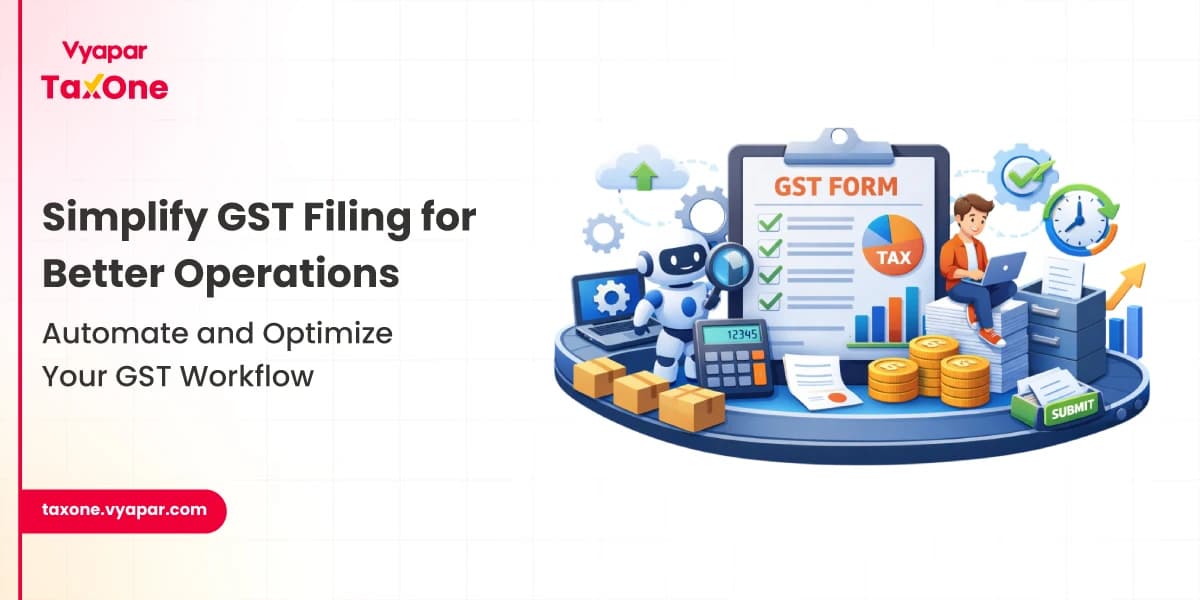
In the business environment, maintaining GST compliance is vital for businesses across India. As businesses scale, the complexity of GST filings increases, demanding greater attention to detail and more frequent updates to comply with regulatory changes.
Manual filing systems, while functional, are prone to errors, time-consuming, and inefficient.
However, automating your GST filing can not only streamline the entire process but can also significantly enhance business operations.
This blog post explores how automating GST filing can improve business performance, reduce compliance risks, and save time.
India's Goods and Services Tax (GST) system is among the most dynamic tax systems globally. Regular amendments to GST laws, rate changes, and updates in procedural guidelines require businesses to stay up to date. For businesses relying on manual systems, ensuring timely compliance is often a significant challenge.
Challenges Include:
By automating the GST filing process, businesses can automatically stay compliant with the latest rules, minimizing the risk of non-compliance.
As businesses grow, so do their transaction volumes. For those still managing GST filing manually, this means spending significant time and effort on gathering and reconciling data. Moreover, mistakes in data entry can lead to discrepancies that result in errors in tax filings, which may attract penalties.
Common Data Challenges:
Automating the data capture and reconciliation process ensures high accuracy, drastically reducing human errors and improving data quality.
Manual GST filing requires significant time for tasks like gathering invoices, reconciling data, and completing returns. For small and medium-sized enterprises (SMEs), this is both time-consuming and resource-draining.
Impact of Manual Filing:
Automating these repetitive tasks frees up resources, allowing teams to focus on strategic initiatives, business growth, and value-added services.
Definition and Scope
GST automation involves using software tools and AI-driven systems to streamline GST processes. It automates everything from data entry and tax calculations to filing and submission of GST returns, reducing the need for manual intervention.
Key Functional Capabilities of GST Automation:
1. Automated Data Import: Automatically pulls data from sales and purchase records.
2. Tax Calculation: Automatically calculates the GST liability.
3. Reconciliation: Matches input tax and output tax records.
4. Error Detection: Flags mismatches or missing data.
5. Filing & Submission: Automatically submits returns to the GST portal.
The primary benefit of automating GST filing is the reduction of errors. Manual entry and reconciliation are prone to mistakes, but automation ensures consistency and accuracy in tax calculations, minimizing the risk of audits and penalties.
Key Advantages:
Automation significantly reduces the time spent on GST filing. Tasks that once took days can now be completed in a matter of hours, freeing up valuable time for tax professionals and business owners.
Time Savings Through Automation:
| Task | Manual vs Automated Filing Time |
|---|---|
| Data entry | 4–5 hours vs 30 minutes |
| Data reconciliation | 3–4 hours vs 15 minutes |
| Filing GST returns | 2–3 hours vs 1 hour |
| Total Time per Filing | 9–12 hours vs 2–3 hours |
By reducing the time spent on routine tasks, businesses can allocate resources more effectively to high-priority activities.
Automated systems provide businesses with ready access to organized data and audit trails, reducing the time and effort needed to prepare for audits. During a GST audit, all records are easily accessible, making the process more transparent and less time-consuming.
GST automation tools often come with reporting and dashboard features that provide actionable insights into your business's tax position. These insights help businesses forecast tax liabilities, manage cash flow, and optimize tax strategy.
Benefits of Data Insights:
Selecting the appropriate GST automation tool is key to maximizing the benefits of automation. When evaluating tools, tax professionals should consider:
Key Criteria for Selection:
A successful transition to GST automation requires proper change management. This includes providing training to the team to ensure they can effectively use the automation tool and monitor its output.
Once automation is in place, continuous monitoring ensures that the system remains accurate and efficient. Tax professionals should regularly review the system's performance and make adjustments as needed to provide the highest level of compliance.
While automation may seem like an upfront investment, the long-term cost savings are substantial. The time and labour saved by reducing manual filing errors and delays lead to a clear return on investment.
Automation is highly effective only if the data it processes is accurate and clean. Businesses should ensure that all tax data is correctly entered before automating the filing process.
Adopting new technology can face internal resistance. However, by highlighting the benefits, such as time savings, reduced errors, and improved compliance, stakeholders are more likely to support the transition.
Vyapar TaxOne offers an advanced GST reconciliation feature that automatically matches purchase and sales data, ensuring that input and output taxes align. This feature reduces discrepancies and errors during the reconciliation process, making filing faster and more accurate.
Vyapar TaxOne integrates seamlessly with Tally, enabling smooth data transfer and workflow automation. It is designed with simplicity in mind, making it easy for businesses of all sizes to adopt.
The real-time error detection system in Vyapar TaxOne flags potential discrepancies early in the process, allowing businesses to make corrections before filing. This feature ensures compliance throughout the process.
For tax professionals, Vyapar TaxOne reduces the time spent on manual tasks, increases accuracy, and improves compliance, giving them more time to focus on high-value advisory services. It ensures accurate filings, minimizes audit risks, and helps manage large volumes of data efficiently.
Tools like Vyapar TaxOne provide businesses with the automation capabilities they need to stay ahead in a complex and fast-changing regulatory landscape.
By adopting these tools, businesses can optimize their GST compliance process, reduce manual labour, and focus on growth and strategic initiatives.
GST automation involves using software tools to automate tasks such as data entry, tax calculation, reconciliation, and GST return filing, reducing human error and improving efficiency.
Automating GST filing enhances accuracy, saves time, reduces compliance risks, improves audit readiness, and allows tax professionals to focus on strategic tasks.
Vyapar TaxOne offers automated GST reconciliation, error alerts, workflow integration, and real-time compliance insights to ensure accurate, timely GST filings.
Yes, GST automation is ideal for businesses of all sizes, including SMEs, as it streamlines the filing process, reduces manual effort, and ensures consistent compliance with GST regulations.
To get started, choose a reliable GST automation tool like Vyapar TaxOne, integrate it with your accounting systems, and train your team to use it effectively for efficient GST filing.


Tax Professional & Business Finance Expert
Tax Professional & Business Finance Expert
Tax Professional & Business Finance Expert