 Is Now Vyapar TaxOne | Same Trust, New Name!
 AI Weapon for Financial Soldiers
CEO


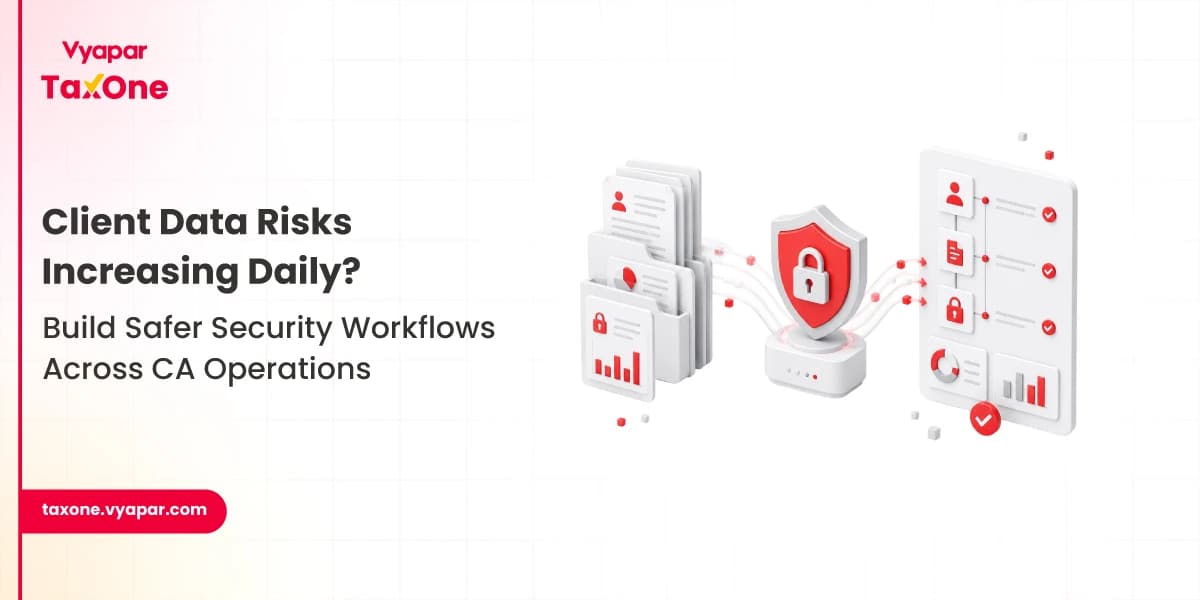
A CA firm’s daily workflow involves much more than accounting entries and tax filings.
Client financial statements, GST reports, income tax documents, audit files, payroll records, and business-sensitive information move between partners, employees, clients, and external stakeholders every day.
The challenge is that most security issues do not start with a major technical failure. They usually begin with small workflow gaps, an employee accessing files without proper permissions, a reused password, a document shared through an unsecured channel, or a phishing email received during a busy filing deadline.
For CA firms, these small gaps can create larger problems because the information handled is highly sensitive and often linked to multiple clients.
Cyber hygiene is about building daily security habits around these workflows so that client data remains protected even when teams are handling high volumes of compliance work.
In many CA offices, data moves across multiple touchpoints:
Every step creates a possible security checkpoint.
A firm may have strong accounting practices, but if document access, employee permissions, backups, or communication channels are not managed properly, sensitive information can still be exposed.
Beyond internal processes, the software environment used for accounting also plays an important role in protecting client information. Understanding accounting software security practices helps firms evaluate access controls, data protection features, and possible risks before adopting or expanding digital workflows.
This is why cyber hygiene is not only an IT responsibility. It becomes part of the accounting workflow itself.
CA teams frequently receive emails related to GST notices, income tax updates, client documents, and government communication.
During peak periods, such as GST filing deadlines or audit seasons, employees are more likely to open urgent-looking emails without verifying the source.
A fake email asking for login details or document downloads can provide attackers access to important systems.
As firms grow, multiple team members may work on the same client accounts.
Without proper access controls, employees may have access to files they do not need for their role.
This increases the risk of accidental sharing, unauthorized downloads, or exposure of confidential information.
Many CA firms maintain years of client records.
If backups are irregular or stored only on one device, system failures, ransomware attacks, or accidental deletion can disrupt ongoing work and delay compliance activities.
While traditional phishing attempts remain common, attackers are increasingly using AI tools to make these messages more convincing and harder to identify.
For CA teams, this means fraudulent emails can closely resemble genuine client requests, compliance updates, or document-sharing instructions. These messages may match normal communication patterns, making them harder to identify during busy filing periods.
As these threats become more sophisticated, firms need stronger verification processes, employee awareness, and security controls to identify suspicious activity before sensitive information is shared.
Most CA firms understand the importance of protecting client data. However, maintaining consistent security practices becomes difficult because of operational pressure.
Common reasons include:
During regular periods, these gaps may not create visible issues.
They usually become noticeable when the firm handles higher volumes, experiences employee changes, or faces an audit review.
The biggest security problems often appear because small workflow gaps remain unnoticed.
Some common situations include:
Since client documents frequently move between teams and clients during compliance cycles, firms need secure file-sharing practices for accountants to reduce risks related to unauthorized access, accidental sharing, and document exposure
The problem is not always the absence of security tools.
Often, the issue is that security practices are not integrated into everyday accounting workflows.
A CA firm managing 500+ client accounts found that multiple team members were using shared folders to manage GST reports, audit documents, and financial statements.
During an internal access review before the audit cycle, the team identified that some employees could view client folders that were unrelated to their current responsibilities.
The issue remained unnoticed during regular operations because teams were focused on completing month-end closures and filing deadlines.
After reviewing folder permissions and defining access responsibilities, the firm was able to reduce unnecessary access to confidential client records and create better control over document handling.
An accounting team managing records for 20+ GST registrations relied on local storage locations for important reports, supporting documents, and compliance files.
Before a major filing cycle, a system issue affected access to several months of working records.
The team spent multiple days recovering files and recreating missing information before completing pending compliance activities.
The situation highlighted why backup verification needs to happen before critical deadlines instead of after data access problems occur.
A practical approach is to include security checks within existing accounting workflows.
Identify:
Define:
Implement:
Check:
Employees should know how to identify:
AI-supported security tools are becoming relevant for CA firms because many cyber risks are difficult to identify through manual checks alone.
AI does not replace basic security practices such as access control, backups, or employee awareness. Instead, it can help teams identify unusual patterns faster, such as suspicious emails, unexpected login activity, or abnormal file access behaviour.
For accounting teams handling multiple clients and compliance deadlines, this additional layer of monitoring can help highlight potential risks before they affect daily operations.
For CA firms, protecting client data is closely connected with maintaining reliable accounting operations.
Cyber risks often increase as firms handle more clients, more employees, and more digital records across multiple systems. Issues usually appear when teams rely on scattered files, informal sharing practices, or individual methods for managing important information.
As accounting workflows become more complex, firms need better visibility into:
We have seen CA teams gradually move toward structured digital workflows when manual tracking starts affecting control, accuracy, and accountability.
Systems built around organized accounting processes help firms create clearer workflows instead of depending only on individual practices.
This is the kind of operational shift accounting teams experience as client volume grows and manual tracking becomes difficult to manage. Over time, these challenges lead many firms toward structured systems like Vyapar TaxOne as workflow complexity increases.
Strong cyber hygiene, controlled access, employee awareness, and structured accounting practices together help CA firms manage digital operations more confidently.
During filing cycles, teams often receive a high volume of emails related to notices, documents, and client requests. CA firms should verify sender details, avoid opening unexpected attachments, and train employees to identify suspicious links or urgent requests for credentials.
Before sharing sensitive files, teams should verify the recipient, confirm that the document is being shared through an approved channel, and ensure access permissions are limited to the required users.
AI-based security tools can help identify unusual patterns such as suspicious emails, abnormal login behaviour, and unexpected data access activity. However, AI works best as an additional security layer along with proper access controls and backup practices.
CA firms should maintain regular backups of critical client documents, verify that backups can be restored when required, and ensure important records are protected before high-pressure compliance periods.
As teams grow, firms need clearer processes around access permissions, document storage, approvals, and responsibility tracking. Structured workflows help reduce dependency on individual practices and improve control over sensitive information.

Tax Professional & Business Finance Expert
Tax Professional & Business Finance Expert
Tax Professional & Business Finance Expert