 Is Now Vyapar TaxOne | Same Trust, New Name!
 AI Weapon for Financial Soldiers
Chartered Accountant


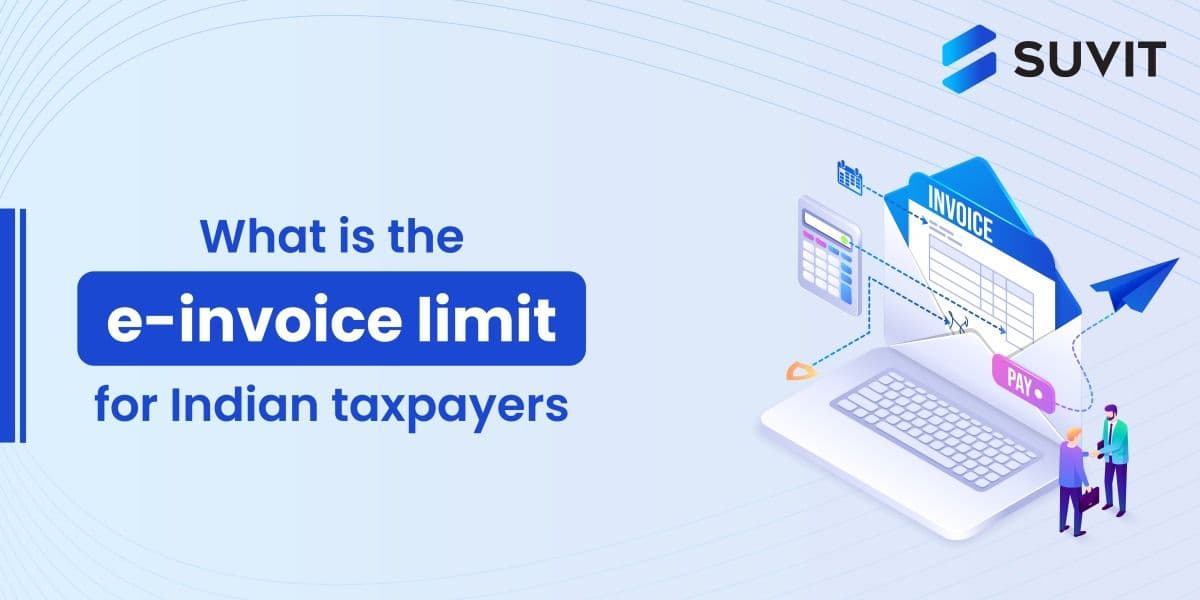
e-Invoicing is a system for electronically reporting business-to-business (B2B) invoices to GST authorities.
Introduced on 1st October 2020, it aims to improve compliance, reduce errors, and streamline data exchange among stakeholders.
This guide covers the e-invoice limit for Indian taxpayers, the applicability of e-invoicing under GST, and the phased implementation timeline in India.
The e-invoice limit refers to the annual aggregate turnover (AATO) of a taxpayer in any financial year from 2017-18 onwards. AATO includes the turnover of all GSTINs registered under a single PAN across India. This limit determines whether a taxpayer is required to generate e-invoices for their B2B transactions.
Over time, the GST authorities have revised the limit based on feedback and the readiness of businesses. The most recent notification on 10th May 2023 reduced the limit to Rs. 5 crore, effective 1st August 2023. Here’s a quick overview of the e-invoice limit and corresponding dates of applicability:
| Phase | Turnover Limit | Date of Applicability |
|---|---|---|
| I | More than Rs. 500 crore | 1st October 2020 |
| II | More than Rs. 100 crore | 1st January 2021 |
| III | More than Rs. 50 crore | 1st April 2021 |
| IV | More than Rs. 20 crore | 1st May 2021 |
| V | More than Rs. 10 crore | October |
| VI | More than Rs. 5 crore | 1st August 2023 |
For businesses exceeding the Rs. 5 crore turnover threshold, e-invoicing has become mandatory for B2B transactions starting 1st August 2023.
The rules for e-invoicing under GST depend on several factors: the nature of the transaction, the recipient’s type, and the supplier’s and recipient’s locations. Below are the key points:
The implementation of e-invoicing in India has been gradual, with different turnover limits applied in phases. The goal was to ensure businesses had adequate time to prepare and comply. Below are the milestones:
The adoption of e-invoicing under GST offers several advantages:
Taxpayers must report invoices to the IRP within seven days of generation to avoid penalties or compliance issues.
e-Invoicing is transforming the way businesses handle their GST compliance. It ensures transparency, reduces manual intervention, and promotes efficient tax administration.
Whether you’re a small business or a large enterprise, understanding and implementing e-invoicing can simplify your operations and keep you GST-compliant.
If your turnover exceeds Rs. 5 crore, ensure your systems are updated to generate e-invoices seamlessly. Early adoption and integration with your existing tools can save time and resources, making compliance hassle-free.
Also Read: Understanding e-Invoicing Under GST: Applicability, Limits & Implementation Date

Tax Professional & Business Finance Expert
Tax Professional & Business Finance Expert
Tax Professional & Business Finance Expert