 Is Now Vyapar TaxOne | Same Trust, New Name!
 AI Weapon for Financial Soldiers
CA


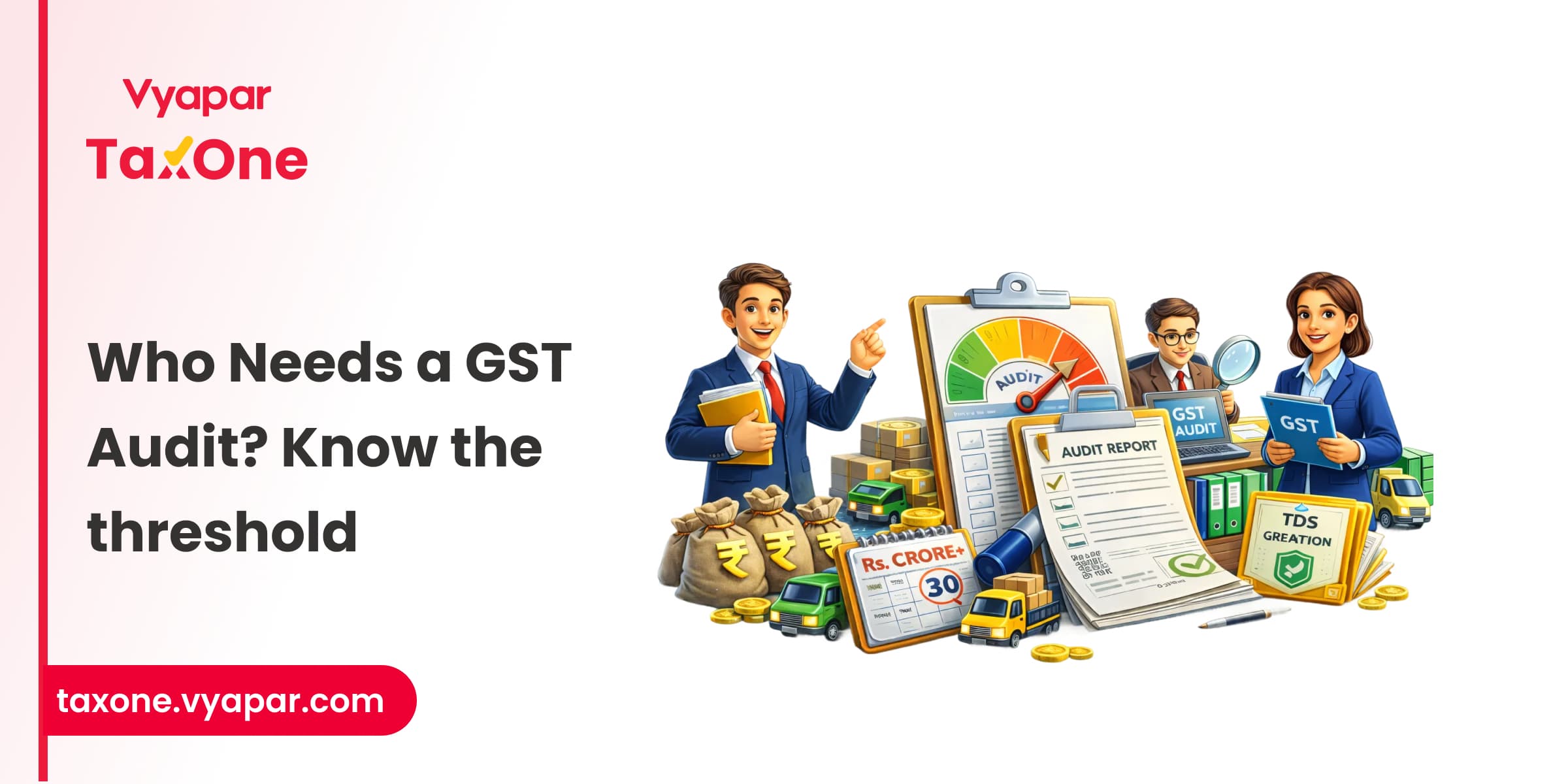
During a recent discussion at our office about the latest GST Council updates, one important point that arose was the GST audit applicability and limits.
To clarify this key topic for businesses, we have compiled a comprehensive guide explaining who needs to file the GST audit report, applicable turnover thresholds, self-certification provisions, and critical deadlines.
This blog is meant to help Indian taxpayers navigate GST audit requirements confidently in 2025.
A GST audit involves reviewing a GST-registered taxpayer's records, returns, and documents to ensure the correctness of reported turnover, taxes paid, refund claims made, and input tax credit utilised.
It is one of the government's mechanisms to ensure compliance under the trust-based GST regime, where taxpayers self-assess their tax liability.
| Aggregate Turnover | Requirement | Form to File |
|---|---|---|
| Up to ₹5 crore | No audit required; file annual returns only | GSTR-9 |
| Above ₹5 crore | Self-certified GST audit report mandatory | GSTR-9C (self-certified) |
| Before FY 2020-21 (historical context) | CA/CMA audit mandatory for turnover above ₹2 crore | GSTR-9C (CA/CMA certified) |
Aggregate turnover includes:
Only a Chartered Accountant (CA) or Cost Accountant (CMA) can perform a GST audit under section 35(5) of the CGST Act. This applies only when an audit is mandatory for the taxpayer.
It’s best to appoint your GST auditor at the start of the financial year. This ensures ample time to prepare, avoid last-minute rush, and maintain compliance smoothly.
The core of the audit involves matching the turnover stated in your audited financial statements with the returns you have filed under GST. The auditor carefully verifies the claimed input tax credit (ITC) and checks for unpaid tax liabilities.
Maintaining precise and detailed records throughout the year is crucial. This includes sales and purchase invoices, tax payment records, and updated books of accounts. Proper documentation makes the audit straightforward and reduces the chance of discrepancies.
The audit culminates in the preparation of Form GSTR-9C. This report highlights any issues found, reconciles tax liabilities, and provides a clear view of the taxpayer’s GST compliance status. This can be either self-certified or CA/CMA certified, depending on turnover and requirements.
Vyapar TaxOne effortlessly syncs data from popular accounting software like Tally, Vyapar, Excel, and GST portals, consolidating all critical information in one place for smooth audit processes.
Advanced AI-powered checks and reconciliations enable businesses to claim the maximum eligible ITC, reducing compliance gaps and audit risks.
Centralised management of invoices, notices, and audit-related documents keeps businesses organised and ready for any GST audit scrutiny.
By automating repetitive accounting and compliance tasks, Vyapar TaxOne helps businesses save significant time and resources, allowing focus on core operations while staying GST-compliant.
Vyapar TaxOne is a robust GST automation solution that ensures compliance with audit applicability requirements and empowers businesses with precision, efficiency, and peace of mind during GST audits.
Staying well-informed and proactive ensures hassle-free GST audit compliance amid the dynamic regulatory environment.
Businesses whose total annual turnover exceeds ₹5 crore are required to submit a self-certified GSTR-9C along with their annual return.
No, compulsory CA/CMA audit for turnover over ₹2 crore was removed from FY 2020-21. Above ₹5 crore turnover, self-certification is allowed.
It is the sum of taxable supplies, exempt supplies, and exports across all GST registrations under the same PAN.
The annual return and GSTR-9C must be filed by 31st December following the financial year, subject to extensions.
It automates reconciliations, generates audit reports, tracks deadlines, and integrates accounting data to simplify compliance.


Tax Professional & Business Finance Expert
Tax Professional & Business Finance Expert
Tax Professional & Business Finance Expert