 Is Now Vyapar TaxOne | Same Trust, New Name!



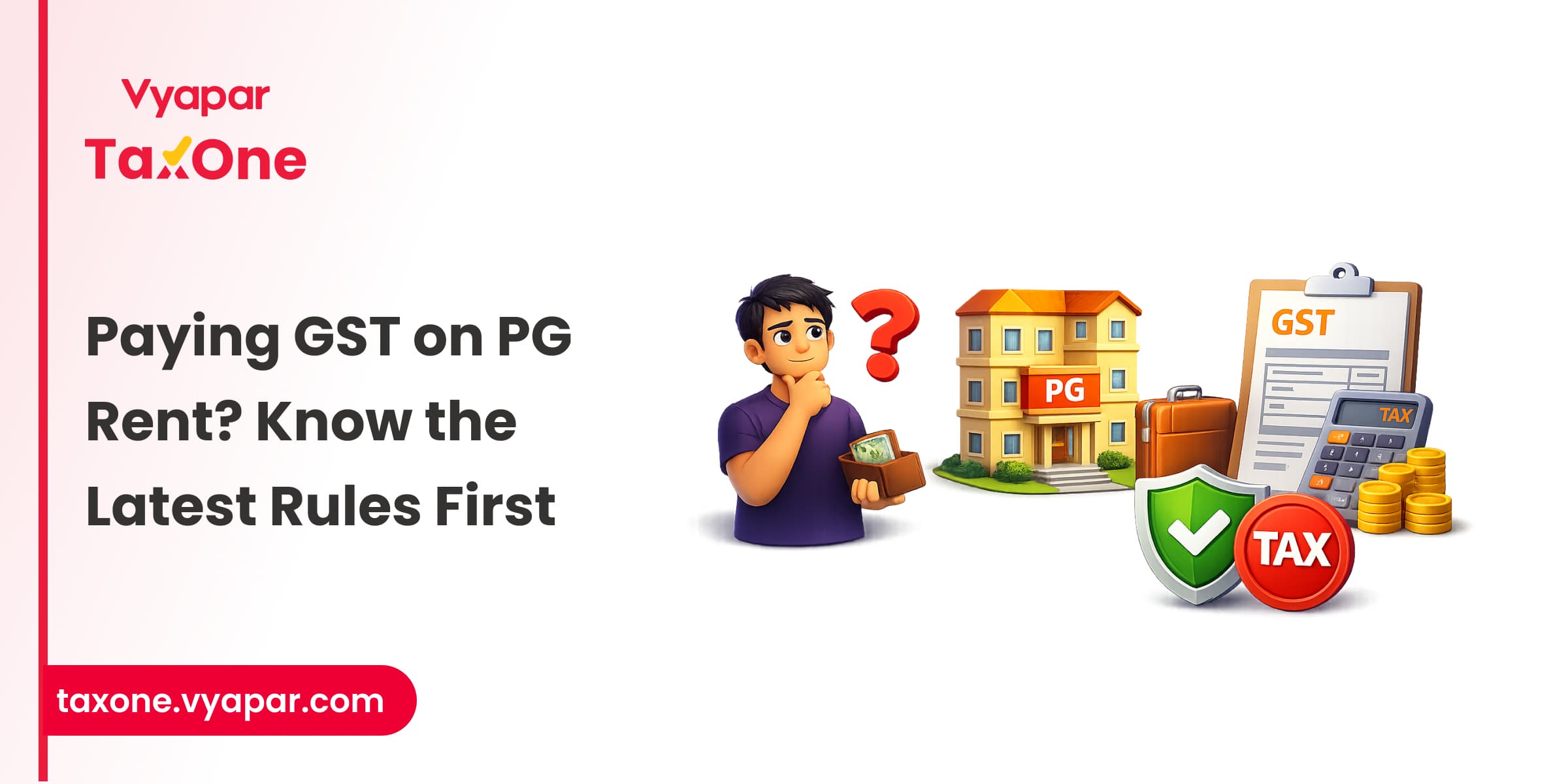
When we think about affordable accommodation, especially for students and young professionals, Hostels and Paying Guest (PG) accommodations come to mind.
They offer a budget-friendly and flexible living arrangement. But have you ever wondered how these services are taxed under India's Goods and Services Tax (GST) regime?
As a FinTech firm, Vyapar TaxOne aims to simplify tax implications for various services, including accommodations, to help individuals and businesses easily navigate compliance.
In this blog, we'll explore how GST applies to hostels and PG accommodations, helping you understand what you need to know whether you're a tenant, owner, or manager.
What You Need to Know About GST and Why It Matters
GST, or Goods and Services Tax, is a comprehensive, multi-stage tax levied on the supply of goods and services in India.
Introduced on July 1, 2017, GST replaced a host of indirect taxes previously levied by the central and state governments, creating a unified tax structure.
The purpose of GST is to streamline the taxation process and make it more efficient by reducing the cascading effect of multiple taxes.
Are Hostels and PGs Really Subject to GST? Here’s the Scoop
The big question is whether hostel and PG accommodations are considered taxable services under the GST regime.
The answer depends on a few factors, including the nature of the accommodation and the tariff charged per day.
Exemption Based on Daily Tariff
According to the GST Act, residential properties used for personal stay, including hostels and PGs, are generally exempt from GST if the declared tariff per day for a unit (room) is below a certain threshold. As per the current guidelines:
-
Tariff Below ₹1,000 per Day: If the daily rent of a hostel or PG room is below ₹1,000, no GST is applicable. This exemption makes these accommodations more affordable for students and professionals on a tight budget.
-
Tariff Above ₹1,000 per Day: If the daily rent is ₹1,000 or more, GST is applicable. The applicable GST rate is 12% on the tariff. This rate applies irrespective of whether the accommodation is being provided by a registered or unregistered entity under the GST law.
The Real Impact of GST on Your Hostel or PG Business
For those managing or owning hostels and PGs, understanding the GST implications is crucial to ensure compliance and avoid penalties. Here are the key aspects to consider:
1. Registration Under GST
If the annual turnover from renting out rooms in a hostel or PG accommodation exceeds ₹20 lakhs, the owner or service provider must register under GST. For special category states, this threshold is reduced to ₹10 lakhs.
2. Input Tax Credit (ITC) Eligibility
Owners registered under GST can claim Input Tax Credit (ITC) on expenses incurred for maintenance, repairs, or improvements of the accommodation. However, ITC cannot be claimed for expenses related to construction or for goods/services used for personal consumption.
Also Read: Self-Assessment under GST: How to Ensure Compliance and Avoid Common Pitfalls
Bundling Services? How GST Handles Composite Supplies
When hostels and PG accommodations provide additional services like food, laundry, and housekeeping along with accommodation, these could be considered a composite supply under GST.
A composite supply is when two or more goods or services are naturally bundled and supplied together in the ordinary course of business.
How Does GST Apply to Composite Supply?
In the case of hostels and PG accommodations, if the primary service (accommodation) is bundled with auxiliary services (like meals or laundry) for a single price, GST is applied based on the principal supply.
Here, the principal supply is the accommodation service.
- Example: If a PG offers accommodation for ₹1,500 per day including meals and laundry, GST would apply at the rate applicable to the principal service, which is accommodation (12% if the daily tariff is above ₹1,000).
However, if these additional services are optional and charged separately, GST would be applied individually to each service. For instance, accommodation would be taxed at 12% if above ₹1,000 per day, while food services, if provided, would attract GST at 5% or 18%, depending on the type of food service.
How GST Affects Students and Young Professionals Living in Hostels and PGs
For tenants, understanding GST is equally important. Most students and young professionals choose hostels or PGs for their affordability and convenience.
Knowing whether GST applies to their accommodation can help them better plan their budgets.
1. Cost Implications
If the accommodation cost exceeds ₹1,000 per day and GST is charged, this could mean a higher outlay for tenants. It's essential to check with the accommodation provider if GST is included in the advertised rent or if it will be an additional charge.
2. Tax Invoices and Receipts
If GST is charged, the tenant should receive a tax invoice from the accommodation provider. This invoice should indicate the GST charged and the GST registration number of the provider. This transparency ensures that tenants are aware of the taxes they're paying and can avoid any hidden charges.
The Latest GST Updates You Should Be Aware Of
In recent rulings, the GST Council has clarified the applicability of GST on hostels and PG accommodations, especially regarding tariff calculations and exemptions.
Both providers and tenants need to stay updated with these changes to remain compliant and avoid unnecessary costs.
Important Points from the Latest Guidelines:
-
The exemption applies to properties where the accommodation is residential and is used by students or working professionals for living purposes, not for commercial activities.
-
If additional services like food, laundry, or housekeeping are provided and are included in the tariff, these also attract GST. If billed separately, each service's GST applicability needs to be evaluated individually.
Commercial vs. Residential Accommodation: GST Rules Explained
Another important aspect under GST law is distinguishing between commercial and residential accommodations.
-
Residential Accommodation: If a property is used for residential purposes, such as hostels and PGs specifically for students or working professionals, and the tariff is below ₹1,000 per day, it is exempt from GST. This exemption aims to make affordable housing options more accessible.
-
Commercial Accommodation: If the accommodation is used for commercial purposes (e.g., hotels, inns, guest houses where people stay temporarily for business or travel), then it is always subject to GST regardless of the tariff rate.
The GST Council has provided clarifications to ensure that entities correctly classify their services and apply the appropriate tax rate.
Service providers must assess whether their accommodation is purely residential and aligns with the exempted categories, or if it falls under the commercial category, which is fully taxable.
By understanding these distinctions and the concept of composite supply, both service providers and tenants can better navigate GST compliance and avoid potential pitfalls related to misclassification or incorrect billing.
Debunking Myths: Common Misconceptions About GST on Hostel and PG Services
There are several misconceptions around GST on hostel and PG services. Let’s address a few:
-
Misconception: All hostel and PG services are exempt from GST.
- Reality: Only accommodations with a tariff below ₹1,000 per day are exempt. Those above this threshold attract a GST rate of 12%.
-
Misconception: GST applies only to commercial properties.
- Reality: GST is applicable based on the nature of the service and the tariff, not merely the property's classification.
Also Read: A Step-by-Step Guide to Filling All Types of GST Returns in India
Staying on Top of GST: Tips for Compliance and Avoiding Pitfalls
For owners and managers of hostels and PG accommodations, compliance is crucial. Here are some steps for making sure you're on the ideal side of the law:
-
Stay Updated: Regularly check for updates from the GST Council regarding exemptions and applicable rates.
-
Maintain Proper Documentation: Keep all invoices, rental agreements, and records of payments received. This documentation is essential in case of audits or disputes.
-
Seek Professional Advice: Consulting a tax professional can help navigate the complexities of GST compliance, especially when multiple services are bundled together.
Understanding the GST implications on hostel and PG accommodation services is essential for both providers and tenants.
For providers, it's about compliance and avoiding penalties. For tenants, it’s about understanding costs and ensuring there are no hidden charges.
With the correct information, both parties can make informed decisions and avoid any surprises.
Managing GST for hostel and PG accommodations can be complex, but Vyapar TaxOne is here to make it easier. Our advanced automation tools streamline GST reconciliation, helping you stay compliant with ease.
Want to experience hassle-free GST management? Try Vyapar TaxOne for free for a week and see how our solutions can simplify your accounting processes.