 Is Now Vyapar TaxOne | Same Trust, New Name!
 AI Weapon for Financial Soldiers
Vyapar TaxOne


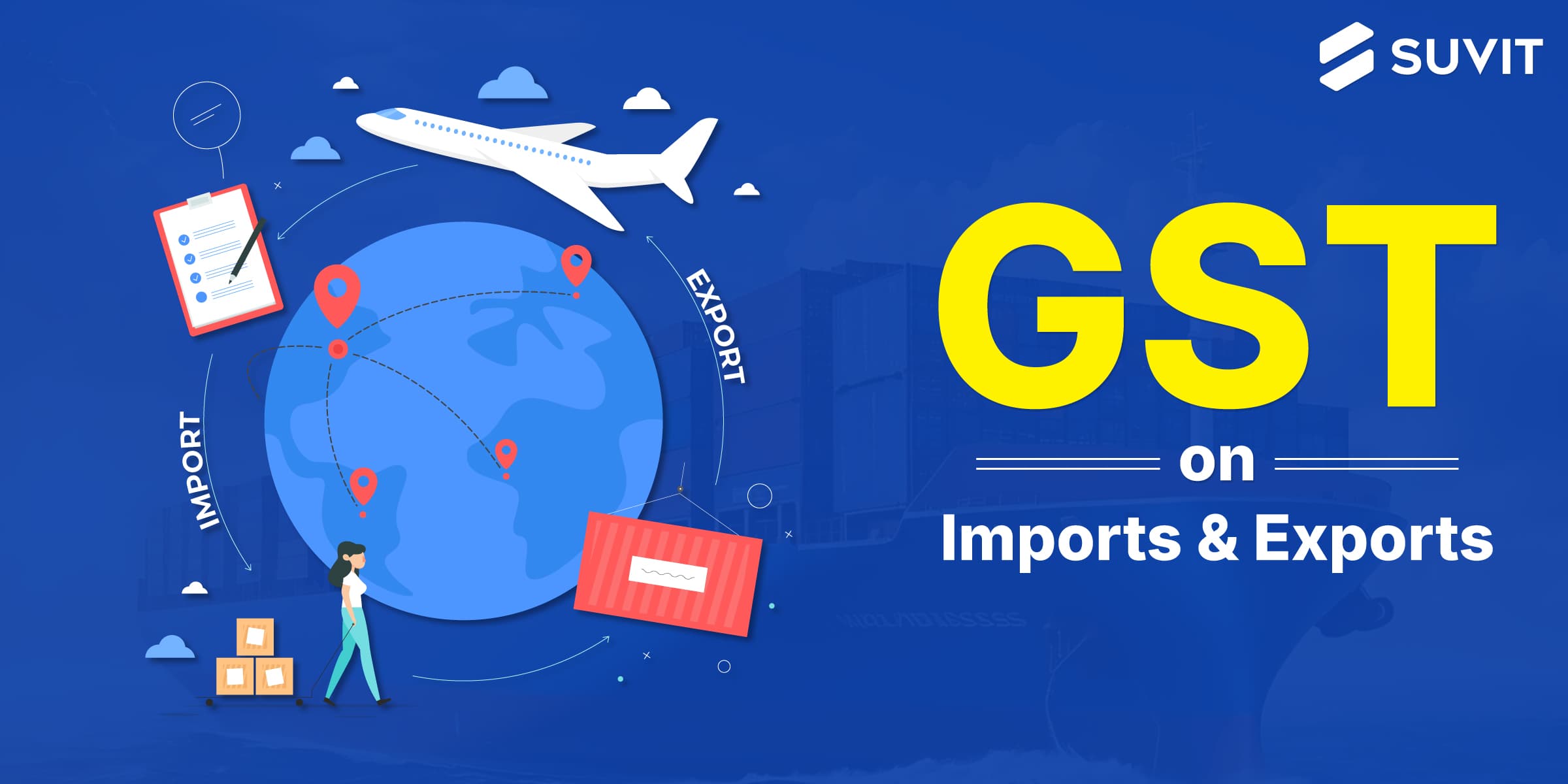
The tax system in India has been completely transformed by the Goods and Services Tax (GST). It simplifies indirect taxes, making compliance easier for businesses. However, understanding GST on imports and exports can be challenging.
GST on imports and GST on exports with this actionable guide, packed with clear definitions, real-world examples, step-by-step refund workflows, and insider pro tips to bulletproof your compliance, accelerate cash flow, and scale globally.
Imagine this: your shipment cleared customs, only to stall in limbo because of a GST hiccup. Or you’ve exported top-selling goods, yet your refund declines for months, starved of working capital. Painful, right?
Whether you’re importing inputs to fuel production or exporting finished goods to new markets, understanding GST on imports and GST on exports is non-negotiable. Get it right, and you unlock seamless clearance, lightning-fast refunds, and iron-clad compliance.
Let’s transform your cross-border tax chores into growth engines.
When goods or services enter India, they’re treated as if supplied domestically, meaning IGST (Integrated GST) plus applicable customs duties apply at customs clearance. This levels the playing field between imports and local production.
The GST on imports comprises Integrated GST (IGST) and, in some cases, customs duties. Let's break down the calculation in simpler terms.
Determine the Assessable Value: CIF (Cost + Insurance + Freight) + landing charges.
Add Basic Customs Duty (BCD) (e.g., 10%).
Apply IGST on (Assessable Value + BCD) (commonly 18% for most HSN chapters).
Bonus Pro Tip: Use a Letter of Undertaking (LUT) for services imports under Reverse Charge to defer immediate payment and streamline cash flow.
GST on exports is designed to boost Indian exports by making them zero-rated. This means that the goods and services exported from India are not subject to GST, promoting competitiveness in the global market.
Both types of exports are treated as zero-rated supplies under GST.
Zero-rated supplies mean that exporters do not have to charge GST on their exports. Additionally, exporters can claim a refund of the input tax credit (ITC) on the inputs and input services used in the export process.
From May 8, 2025, GSTN shifted key export refunds (services with tax paid, SEZ supplies, deemed exports) to an invoice-level process, no more selecting tax periods; just upload invoices directly and hit “Create Refund Application”.
Ensuring Accurate Documentation
Maintaining accurate and complete documentation is important. This includes invoices, shipping bills, and bills of entry. Proper documentation ensures smooth customs clearance and facilitates timely refunds.
Regular Training and Updates
Businesses should regularly train their staff on GST compliance and stay updated with the latest changes in regulations. This helps minimize errors and avoid penalties.
Leveraging Technology for Compliance
Using technology can significantly simplify GST compliance. Tools like GST accounting software can automate tax calculations, generate accurate invoices, and do GST reconciliations on time.
Understanding GST on imports and exports is crucial for businesses engaged in international trade. With zero-rated exports and the ability to claim ITC on imports, GST aims to make Indian businesses more competitive globally. By staying updated with the latest regulations and leveraging automation tools, businesses can navigate GST compliance smoothly.
Key Takeaways
The GST rate on imports varies based on the HSN code of the goods. It includes IGST and may also involve customs duties.
Exports are not exempt but are zero-rated, meaning no GST is charged. Exporters are eligible for input tax credit refunds.
Exporters can claim a refund by filing Form GST RFD-01 along with supporting documents like shipping bills and export invoices.
Zero-rated supplies refer to exports where no GST is charged, and exporters can claim a refund on the input tax credit.
Yes, importers can claim the IGST paid on imports as input tax credit, reducing their overall tax liability.

Tax Professional & Business Finance Expert
Tax Professional & Business Finance Expert
Tax Professional & Business Finance Expert