 Is Now Vyapar TaxOne | Same Trust, New Name!



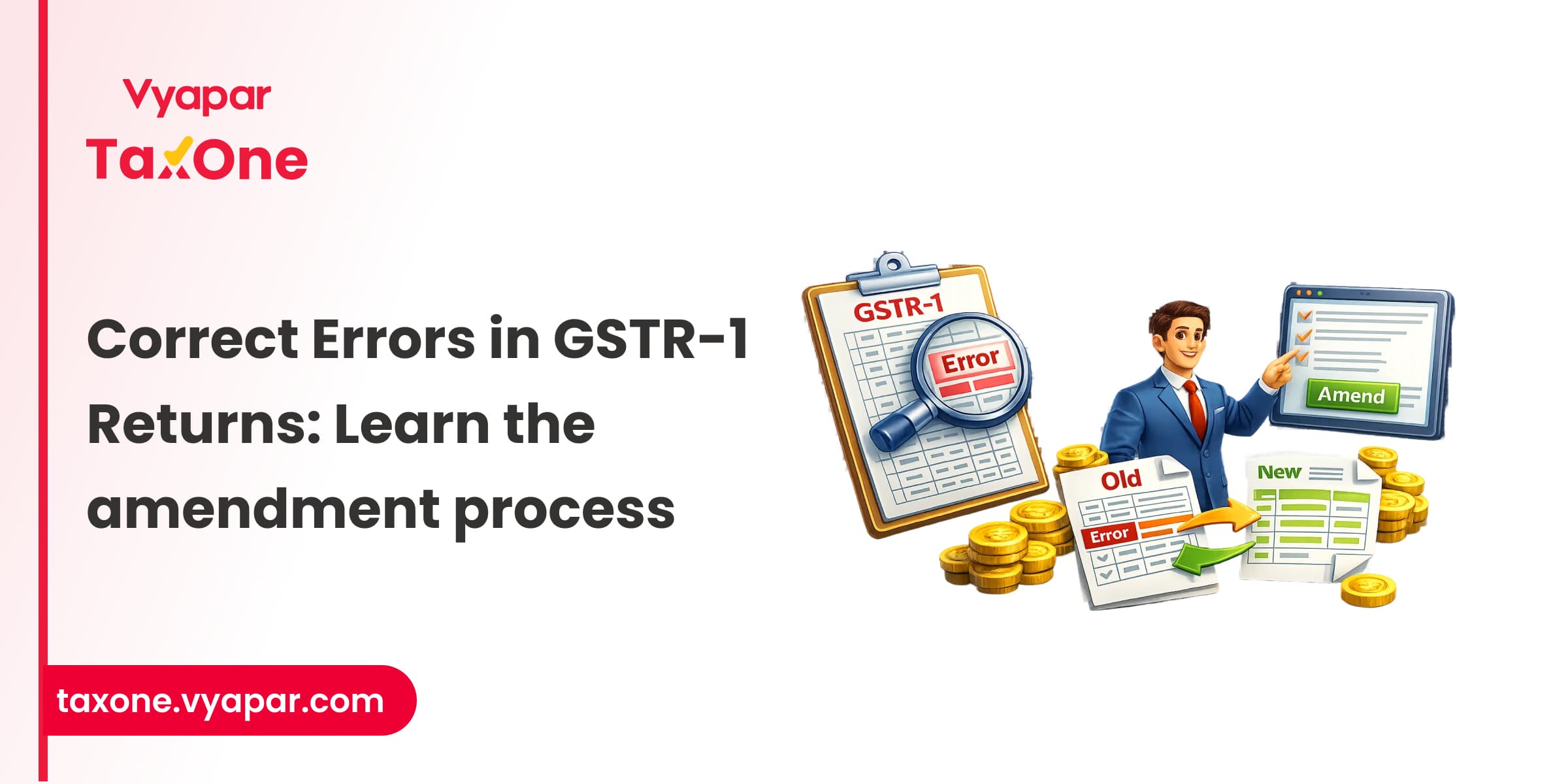
Hey, you. Yes, you, the business owner, accountant, or GST enthusiast who’s ever stared at a GSTR-1 return and thought, “Wait, did I just mess that up?”
Relax. You’re not alone. GSTR-1 amendments are the unsung heroes of GST compliance, letting you fix those inevitable slip-ups before they snowball into bigger problems.
Today, we’re diving deep into the world of GSTR-1 amendments, what they are, why they matter, and exactly how you can make corrections without losing sleep (or your Input Tax Credit).
GSTR-1 Basics (For the Uninitiated)
Let’s not pretend everyone’s a GST pro. Here’s the scoop:
GSTR-1 is a return filed monthly or quarterly by every GST-registered business, reporting all outward supplies (read: sales). It’s the backbone of your GST compliance, feeding data to your buyers so they can claim their Input Tax Credit (ITC) and helping the government keep tabs on tax flows.
But here’s the kicker: GSTR-1 isn’t just a form. It’s a living, breathing record of your business’s sales. And like any living thing, it’s prone to the occasional hiccup, wrong invoice numbers, missing entries, or that one typo that haunts you at night.
Typical mistakes?
- Entering the wrong GSTIN for a customer
- Missing out on an invoice
- Incorrect HSN or SAC codes
- Wrong taxable values or tax rates
- Forgetting to report exports or credit notes
Sound familiar? Don’t worry. That’s exactly why GSTR-1 amendments exist.
When and Why You Need Amendments
Let’s be real: Even the best of us make mistakes. Maybe you rushed through the filing before a long weekend. Maybe your software glitched. Or maybe, just maybe, you’re human.
So, when do you actually need to amend GSTR-1? Here are the most common scenarios:
- You entered the wrong invoice details (date, number, value, or tax rate).
- You missed reporting a sale altogether.
- The GSTIN of your buyer is incorrect, and now they’re calling you in a panic.
- You messed up the HSN code (and with the 2025 rules, that’s a biggie).
- You forgot to include a credit or debit note.
Why does this matter? Because errors in GSTR-1 don’t just affect you, they can block your customers’ ITC, trigger tax notices, and even invite penalties. The GST system is interconnected, and one mistake can ripple through the supply chain.
And here’s the big one: there’s a due date to meet.
You can only make amendments up to 30th November of the following financial year or before you file your annual return, whichever comes first. For FY 2024-25, the deadline falls on 30th November 2025. Miss it, and your mistake becomes permanent.
Types of Amendments Allowed in GSTR-1
Not all amendments are created equal. The GST portal gives you a fair bit of flexibility, but there are limits. Let’s break it down:
1. Amendment of B2B Invoices
Did you enter the wrong GSTIN or invoice value for a business customer? No sweat. Go to Table 4A to apply the necessary corrections.
2. Amendment of B2C Large Invoices
For high-value sales (above ₹2.5 lakh), you can update details like place of supply or tax rate in Table 5A.
3. Amendment of Credit/Debit Notes
Issued a credit note but got the amount wrong? Or perhaps you missed linking it to the correct invoice? Table 9B is your friend.
4. Amendment of Export Invoices
Exports are zero-rated, but the details need to be spot-on. Wrong shipping bill number or port code? Amend it in Table 6A.
5. Amendment of Other Details
HSN codes, taxable values, or even summary-level data, these can be fixed too. With the latest 2025 update, HSN code reporting is stricter than ever, so double-check those digits.
But here’s what you can’t amend:
- Your own GSTIN (if that’s wrong, it’s a whole new registration)
- The original invoice’s financial year or tax period
- Invoice numbers that the recipient has already accepted
Step-by-Step Guide to Making GSTR-1 Amendments
Alright, let’s get practical. Here’s how you actually make those corrections on the GST portal:
Step 1: Log in at gst.gov.in.
Step 2: Navigate to Services > Returns > Returns Dashboard.
Step 3: Select the financial year and tax period you need to amend.
Step 4: Click on the “Amendment of GSTR-1” option for the relevant section (B2B, B2C, exports, credit/debit notes, etc.).
Step 5: Find the invoice or entry you want to fix. Make your corrections, double-check everything.
Step 6: Save your changes. Click the “Preview” button to double-check everything before submitting.
Step 7: Once satisfied, hit “Submit.” The amendment is now part of your official GSTR-1.
A couple of pro moves:
- If your amendment changes your tax liability, make sure you adjust your GSTR-3B accordingly.
- Maintain a record of all amendments for future reference (especially for that inevitable GST audit.)
Common Mistakes to Avoid During Amendments
You’d think fixing mistakes would be straightforward. But there are pitfalls even in the amendment process. Here’s what trips up most businesses:
Amending the Wrong Period:
Always double-check the period you’re amending. Amending the wrong month or quarter can create a whole new mess.
Duplicate Amendments:
Don’t keep amending the same invoice multiple times. It not only confuses your records but can also flag your account for scrutiny.
Not Cross-Verifying with Books/Records:
Before you make any amendment, reconcile your GSTR-1 with your sales register and accounting software. Consistency is king.
Ignoring Communication from Customers/Recipients:
If your buyer says their ITC isn’t reflecting, don’t just brush it off. It often means there’s a mismatch in your GSTR-1. Fix it fast.
Forgetting the Amendment Deadline:
This one’s non-negotiable. Miss the deadline, and you’re stuck with the error.
Pro Tips for Smooth GSTR-1 Compliance
Want to avoid the amendment headache altogether? Here’s how the pros do it:
Keep a Pre-Filing Checklist:
Before you hit submit, cross-verify all invoice details, GSTINs, HSN codes, and values.
Use Reconciliation Tools:
Leverage software that syncs your sales data with your GST returns. Tools like Vyapar TaxOne GST, Zoho Books, or Tally can save you hours, and headaches.
Stay Updated on GST Notifications:
The GST Council loves to tweak rules. Subscribe to GSTN updates or follow trusted GST blogs to stay ahead of changes.
Consult with Your Accountant or GST Expert:
When in doubt, ask. A quick call to your GST consultant can save you from costly mistakes.
Let’s Wrap This Up
GSTR-1 amendments aren’t just a “nice-to-have”, they’re a must for any business serious about GST compliance. With deadlines tighter than ever and scrutiny increasing in 2025, the margin for error is shrinking.
But here’s the good news: With the right process, tools, and a little vigilance, you can fix mistakes, keep your buyers happy, and stay off the taxman’s radar.
So next time you spot an error in your GSTR-1, don’t panic. Just log in, amend, and move on. And if you have a war story or a question, drop it in the comments, let’s help each other stay compliant.
Bonus: Checklist for GSTR-1 Amendments
Want a quick reference? Here’s your amendment checklist:
- Reconcile sales register with GSTR-1 draft
- Verify GSTINs and HSN codes
- Double-check invoice values and tax rates
- Confirm amendment period and deadline
- Preview before submitting on the GST portal
- Adjust GSTR-3B if tax liability changes
TLDR
GSTR-1 amendments allow you to fix errors in your GST returns, think wrong invoice details, missing entries, or incorrect HSN codes. You can amend most details (except GSTIN and some locked fields) up to 30th November of the next financial year or before filing your annual return. Miss the deadline, and the error sticks. Use the GST portal’s amendment feature, reconcile your records, and avoid common mistakes to keep your compliance smooth and your customers happy.
FAQs and Troubleshooting
What is the deadline for GSTR-1 amendments?
Amendments can be made until November 30 of the next financial year or before filing the annual return, whichever comes first.
Is it possible to amend the GSTIN or Place of Supply in GSTR-1?
The GSTIN cannot be changed. However, the Place of Supply can be modified only under certain conditions.
What if the amendment window is missed?
Unfortunately, if you miss the November deadline, you can’t make any more changes for that financial year. The error stays, and you may face penalties or ITC issues.
Can you amend an already amended invoice?
Yes, as long as you’re within the allowed period and the recipient hasn’t accepted the invoice in their GSTR-2A.
What happens if errors persist after multiple amendments?
If you’re caught in a loop of mistakes, it’s time to consult a GST expert. Persistent errors can trigger audits or notices.
Who should you contact for technical issues on the GST portal?
Get in touch with the GST helpdesk or your GST Suvidha Provider.