 Is Now Vyapar TaxOne | Same Trust, New Name!
 AI Weapon for Financial Soldiers
CEO


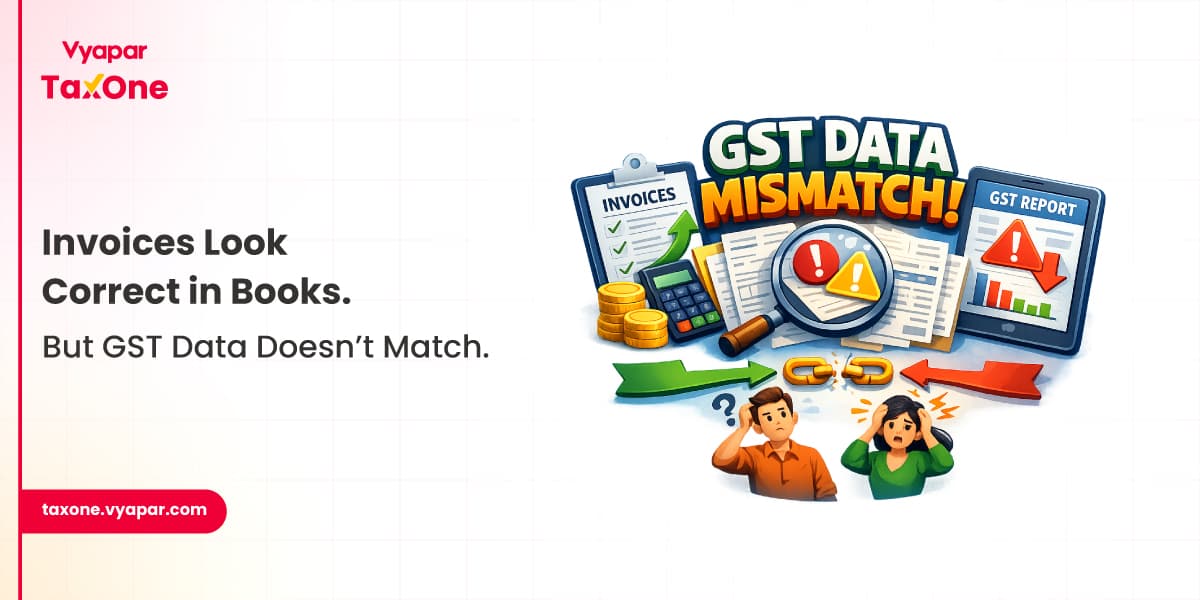
Most accounting teams already “follow IMS cycle” in some form.
Invoices are recorded. GST returns are filed. Reconciliation is attempted.
But when GSTR-2B is matched with purchase registers, gaps start appearing.
Invoices exist in Tally but not in GST portal data. Vendor invoices are delayed. Credit notes don’t align.
We often see that IMS issues are not visible during entry, they surface only during reconciliation pressure.
IMS (Invoice Management System) cycle in GST refers to how invoice data moves between:
In real accounting workflows, IMS is not a single system.
It is a continuous flow of invoice data across multiple tools and timelines.
The cycle typically includes:
The problem is not understanding the cycle.
The problem is data does not stay consistent across each step.
We regularly see accounting teams following IMS steps correctly on paper, but still facing mismatches.
The reasons are usually operational:
Most mismatches start before reconciliation begins, during invoice creation and vendor reporting delays.
This is where IMS breaks in real accounting execution:
When invoices do not appear in GSTR-2B despite being recorded in books, it usually indicates a deeper reporting or vendor filing issue. A detailed breakdown of this issue is covered in understanding missing invoices in GSTR-2B and reconciliation issues.
We often see teams discovering these issues only when reconciliation starts.
In many cases, the invoice is correct, but the mapping between books and GST data is broken.
A manufacturing company processing high-volume raw material purchases found recurring mismatches during monthly GST reconciliation.
Invoices were properly recorded in Tally.
But nearly 12% of invoices were missing in GSTR-2B.
On investigation, the issue was not accounting entry, it was vendor-side GST filing delays and incorrect GSTIN reporting.
This resulted in:
This is a common pattern in manufacturing and trading businesses with large vendor networks.
A CA firm managing GST compliance for multiple clients observed recurring reconciliation delays across different industries.
Even when books were updated correctly, mismatch issues appeared because:
The actual delay was not in GST filing, it was in preparing reconciled data across systems.
In real workflows, IMS operates across multiple disconnected systems:
The key issue is that these systems do not update each other automatically.
Even a small mismatch in GSTIN or invoice number can break reconciliation entirely.
We often see teams spending more time correcting data than preparing returns.
| Stage | Manual Workflow | Structured Workflow |
|---|---|---|
| Invoice entry | Excel/Tally entry | Standard validation before entry |
| GST matching | Month-end activity | Continuous reconciliation |
| Error detection | During filing | During invoice entry |
| Vendor follow-up | Reactive | Scheduled tracking cycle |
| ITC validation | After mismatch | Before GST reporting |
Many of these mismatches can be reduced when invoice entry and validation are automated within accounting systems like Tally, especially through structured invoice automation in Tally and GST workflows that reduce manual entry errors.
Invoices are recorded in accounting systems with GST details.
GSTIN, invoice number, and tax values are checked (often manually).
Invoices are included in GSTR-1 or e-invoicing system.
Purchase invoices are matched with GST portal data.
Credit notes, amendments, and missing invoices are adjusted.
Final reconciled data is used for GSTR-1 and GSTR-3B.
Most delays happen because validation and reconciliation are not continuous.
They happen at the last stage.
Accounting teams typically verify:
We often see this checklist used too late in the cycle.
During refund or scrutiny cases, officers usually check:
Common triggers for notices:
We often see cases where calculation is correct, but reconciliation trail is incomplete.
We regularly see teams improve IMS outcomes by:
Teams that follow structured workflows face fewer last-minute corrections.
As transaction volumes grow, many CA firms and finance teams rely on GST filing and compliance platforms for accounting teams to centralize reconciliation, invoice tracking, and return preparation.
We often see teams struggle not because IMS is complex, but because invoice data is fragmented across systems and timelines.
One recurring issue is that invoice entry, validation, and reconciliation are treated as separate tasks instead of a continuous flow.
In real cases:
IMS works effectively only when invoice flow is continuous across the entire accounting cycle.
We often see teams spending more time preparing data than completing the actual compliance activity. As transaction volumes grow, managing reconciliation, validation, and reporting through separate spreadsheets becomes difficult. Structured workflows help reduce this effort by keeping data organised throughout the process.
Vyapar TaxOne was built to support these workflows and help accounting teams manage GST operations more efficiently.
IMS mismatches happen because GST data is not generated from books alone. It depends on supplier-side GSTR-1 filings and portal updates. Even if Tally records are correct, delays or errors from vendors create differences in GSTR-2B.
We often see invoices perfectly recorded in books but still missing in GST data. This gap becomes visible only during reconciliation.
Most issues are detected during GSTR-2B reconciliation. This is when purchase registers are matched with GST portal data.
The mismatch is usually not created here, but discovered here. Missing invoices, incorrect GSTINs, and delayed filings become visible at this stage.
Reconciliation takes time because it becomes both a matching and correction exercise. Teams don’t just compare data, they fix missing or incorrect entries.
Invoices may be missing, duplicated, or updated late by vendors. This increases manual correction work during reconciliation.
ITC differences occur because books and GST portal work on different timelines. Purchase registers reflect internal updates, while GSTR-2B depends on supplier filings.
Even small delays in vendor reporting can create visible mismatches in ITC.
Officers focus on data consistency, not just calculations. Even correct refund amounts can face queries if supporting records do not fully match GST returns.
We often see issues when invoices, GSTINs, or ledger balances do not align with portal data. This delays verification.
Software usually handles data storage, but IMS issues come from workflow gaps. Vendor coordination, reconciliation timing, and validation steps still remain manual in many cases.
We often see teams relying on tools but still doing reconciliation at month-end, which creates pressure and errors.

Tax Professional & Business Finance Expert
Tax Professional & Business Finance Expert

Tax Professional & Business Finance Expert