 Is Now Vyapar TaxOne | Same Trust, New Name!
 AI Weapon for Financial Soldiers
Vyapar TaxOne


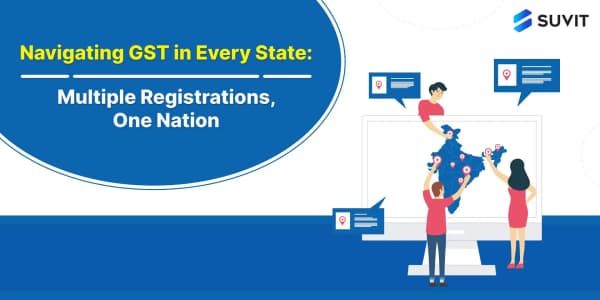
Managing tax compliance in India can often feel like navigating a maze, especially for businesses operating across multiple branches within the same state.
The Goods and Services Tax (GST) has significantly transformed the tax landscape, introducing a unified framework to streamline the process and eliminate cascading taxes. Yet, when it comes to managing multiple branches, the rules surrounding GST registration can get complex.
Did you know that businesses operating in different verticals or locations might need separate GST Identification Numbers (GSTINs)?
Whether you're a growing enterprise or a seasoned player, understanding multiple GST registrations isn’t just about compliance; it's a strategic move that can enhance operational efficiency and market competitiveness. Let’s dive into everything you need to know about multiple GST registrations in India.
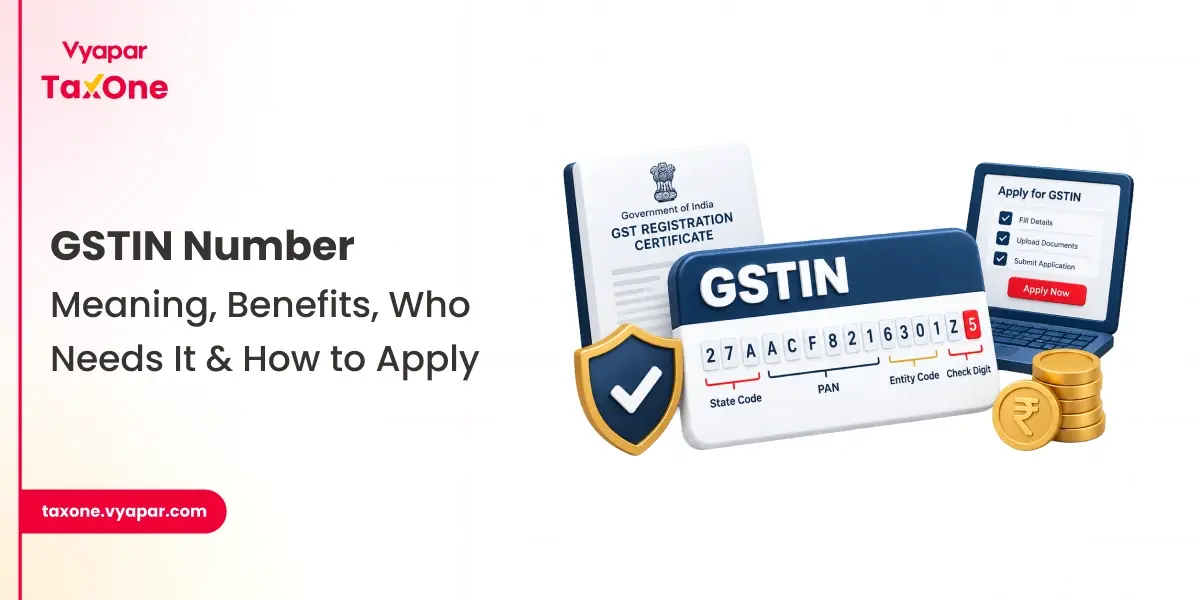
GST registration is the process of legally recognizing a business as a supplier of goods or services under India’s GST regime. It’s like your business’s unique tax identity, encapsulated in the GSTIN. This 15-digit number is essential for collecting and remitting GST to the government while availing input tax credits.
For businesses with multiple branches in the same state, obtaining additional GSTINs can be a game-changer. But when should you consider multiple registrations, and what benefits can they bring?
Obtaining multiple GST registrations isn’t merely procedural; it’s a strategic decision. Here are the key scenarios and advantages:
If your company operates distinct lines of business—say manufacturing and trading—having separate GSTINs can simplify tax management and ensure clearer financial records.
For businesses managing large warehouses or multiple distribution centers, separate GSTINs can optimize logistics, reducing the tax burden on intra-state goods movement.
Separate GST registrations enable better segregation of compliance tasks, minimizing errors and ensuring efficient tax filing processes.
Segregating revenues and expenses by branch or vertical improves internal audits and financial analysis, aiding decision-making.
Should a legal issue arise, having separate GSTINs ensures the problem remains isolated to one branch or vertical, safeguarding the rest of your business.
Many states offer incentives for specific industries or regions. Multiple GSTINs allow businesses to take advantage of these schemes more effectively.
Understanding the right context for multiple registrations is crucial. Here are some detailed scenarios:
Also Read: 7 Easy Steps for Flawless GST Reconciliation in Tally
The Central Goods and Services Tax (CGST) Act provides a comprehensive legal framework for the registration and administration of GST in India. Under this act, businesses have the provision to obtain multiple GST registrations within the same state under certain conditions. Let’s delve into the legalities, the process, and the practicalities of multi GSTIN registration.
According to the CGST Act, a business entity may obtain separate GSTINs for each of its branches in the same state if they have different business verticals. This is outlined under Section 25(2) of the act, which allows for such registrations to facilitate more accurate tax collection and input tax credit distribution.
Assessment: Determine if your business meets the criteria for multiple registrations under the CGST Act.
Application: Apply for additional GSTINs through the GST portal. This involves filling out the Form GST REG-01 and choosing the option for additional registration within the same state.
Documentation: Prepare the necessary documents, including PAN cards, business registration certificates, proof of business address, and details of the authorized signatory.
Verification: The application will be followed by an Aadhaar-based verification or an e-KYC process.
Approval: Upon successful verification, the GST officer will approve the application, and the business will receive separate GSTINs for each branch.
PAN card of the business entity
Incorporation certificate or business registration proof
Address proof of the business premises
Bank account details and a statement
Authorization letter for the authorized signatory
Digital signature certificate (DSC) for the signatory
Also Read: A Step-by-Step Guide to Filling All Types of GST Returns in India
Challenge 1: Managing compliance for multiple GSTINs can be complex.
Solution: Implement robust accounting software that can handle multiple GSTINs and streamline the compliance process.
Challenge 2: Increased administrative burden.
Solution: Consider hiring or consulting with a GST expert to manage the additional workload.
Challenge 3: Confusion over input tax credit distribution.
Solution: Maintain clear records and accounts for each GSTIN to ensure accurate input tax credit claims.
By adhering to these conditions and being prepared for the challenges, businesses can ensure a smooth process for obtaining and managing multiple GSTINs, thereby staying compliant and optimizing their tax position.


Tax Professional & Business Finance Expert
Tax Professional & Business Finance Expert
Tax Professional & Business Finance Expert