 Is Now Vyapar TaxOne | Same Trust, New Name!
 AI Weapon for Financial Soldiers
CEO


For most Chartered Accountants and accounting practitioners in India, daily work revolves around client books, GST returns, TDS filings, bank reconciliations, and MCA compliance.
Yet, many firms continue using legacy systems like desktop-based software, outdated ERPs, or even manual Excel sheets. While familiar, these obsolete methods often lead to errors, compliance issues, and client dissatisfaction.
In today’s environment, where government portals demand accurate filings, clients expect faster turnaround, and competition is growing, depending on old processes can hold your practice back.
Let’s look at the three significant risks CAs face by relying on manual work and outdated systems, with practical ways to avoid them.
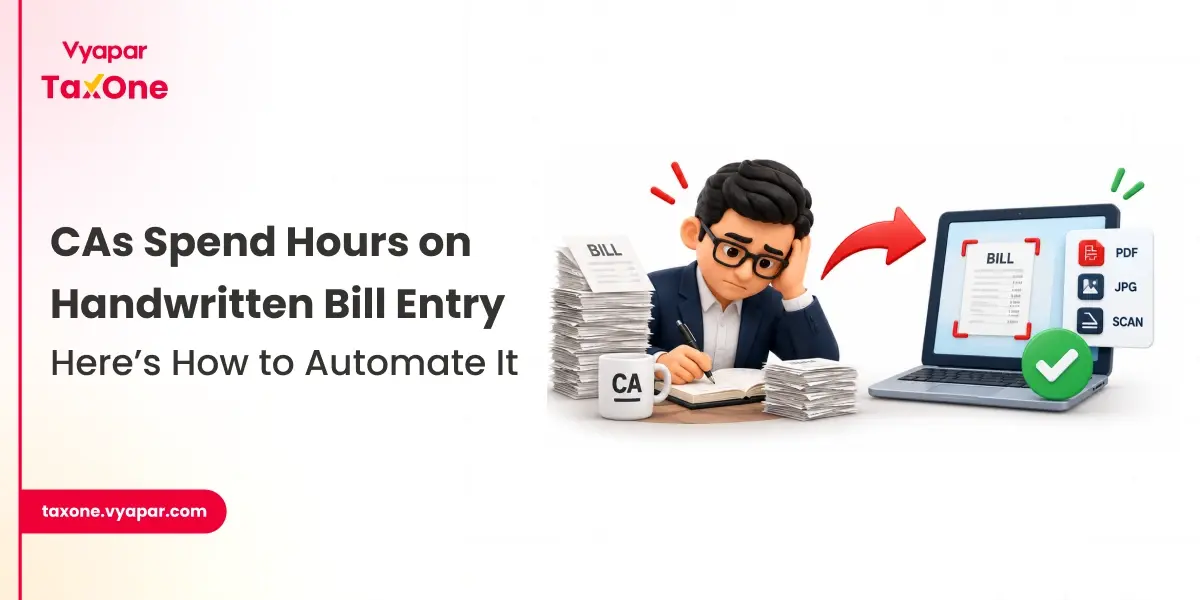
Every CA knows how sensitive numbers are. A small mistake in GST input matching, a miscalculation in TDS return, or a wrong entry in client books can snowball into bigger issues. Manual data entry and outdated software increase the chances of such errors.
Regulatory compliance in India changes quickly. From GST updates to Income Tax portal changes and MCA filings, missing a deadline or filing inaccurate data can bring penalties, late fees, and loss of client trust. Manual tracking on Excel sheets or reminders on calendars often leads to missed deadlines.
As firms grow, so does the workload. Many CAs struggle during peak seasons like tax audit deadlines or year-end closing because manual processes don’t scale. When reports are delayed or filings pile up, clients lose confidence and the firm’s reputation takes a hit.
Efficient communication with clients is key to smooth accounting workflows. Tools like Vyapar TaxOne Chat help CAs transform client interactions from chaotic to controlled by offering:
With Vyapar TaxOne Chat, Chartered Accountants can enhance client satisfaction, improve compliance, and save hours every week by automating repetitive and manual communication tasks.
Try Vyapar TaxOne for free for a week!
For Chartered Accountants, accuracy, compliance, and client service are non-negotiable. But, sticking to legacy systems and heavy manual work increases the risk of errors, delays, and lost opportunities.
By adopting digital accounting tools, automated reconciliation systems, and cloud-based compliance platforms, firms can save time, reduce stress during peak seasons, and provide better service to clients.
The shift may feel challenging initially, but in the long run, it helps CAs work smarter, stay ahead of compliance, and focus on advisory roles that genuinely add value.
You can save significant time by using automated GST reconciliation tools that fetch data directly from the GST portal and match it with your client’s purchase register. Cloud-based accounting software with built-in GST modules ensures fewer mismatches and reduces the need for manual data correction.
Instead of relying on Excel reminders or diaries, use compliance tracking software that sends automatic alerts for Form filings, annual returns, and audit reports. Some tools also integrate with client management systems, allowing you to monitor all filing obligations at once.
Legacy systems are often outdated and not aligned with the latest tax or compliance updates. They lack automation features, which increases the chance of manual errors, missed filings, and scalability issues during busy seasons like tax audits.
Yes, moving to cloud-based platforms allows multi-user access, real-time data sharing, and faster report generation. This eliminates duplication of work and makes client servicing smoother, especially when handling multiple GST registrations or concurrent audits.
Clients are usually concerned about cost or data security. Highlight the benefits of accuracy, faster turnaround, and compliance readiness. Many clients also appreciate real-time access to MIS reports, which helps them in day-to-day decision-making.

Tax Professional & Business Finance Expert
Tax Professional & Business Finance Expert
Tax Professional & Business Finance Expert