 Is Now Vyapar TaxOne | Same Trust, New Name!
 AI Weapon for Financial Soldiers
Vyapar TaxOne


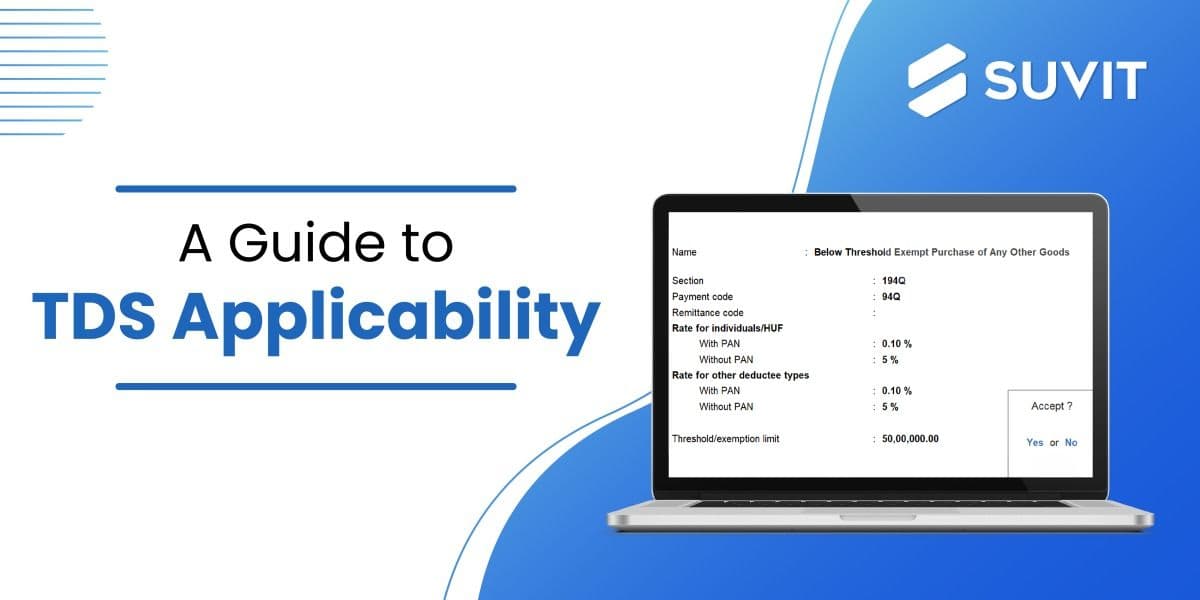
At Vyapar TaxOne, we aim to simplify complex financial regulations so you can focus on growing your business. One such regulation that has created ripples in the financial landscape of India is Section 194Q under the Income-tax Act, 1961, introduced through the Finance Act, 2021.
This section pertains to the deduction of Tax Deducted at Source (TDS) on the purchase of goods, and its impact is something every business should understand.
Whether you're a buyer or a seller, knowing the nuances of Section 194Q is crucial for maintaining compliance and avoiding potential penalties. Let’s walk through what Section 194Q entails and how it affects your business operations.
Section 194Q applies to specific buyers, and here’s how you can determine if you fall under its purview:
Turnover: If your turnover, gross receipt, or sales exceed ₹10 crore in the previous financial year, you are obligated to deduct TDS.
Transaction Size: TDS is applicable when you pay a resident seller for the purchase of goods exceeding ₹50 lakh in value during a financial year.
Simply put, if you're a buyer who crosses both these thresholds, this section applies to you.
Once your transaction with a seller surpasses the ₹50 lakh mark in a financial year, you are required to deduct TDS at 0.1% on the amount that exceeds ₹50 lakh. For instance, if your total purchases from a seller amount to ₹70 lakh, TDS will apply to ₹20 lakh (₹70 lakh - ₹50 lakh).
Let’s break down the TDS calculation process to clarify things:
This TDS is applicable on a seller-specific basis, meaning you calculate this for each individual seller with whom you do business annually.
Section 194Q became effective from July 1, 2021. However, while the rule kicked in on that date, the ₹50 lakh threshold is calculated from April 1, 2021, making it retroactive for purchases made earlier in the financial year.
The question of how Goods and Services Tax (GST) interacts with TDS under Section 194Q is an important one. Here’s the lowdown:
This subtle distinction is important, so ensure you're calculating correctly to avoid compliance issues.
The timing of the TDS deduction is also crucial. TDS should be deducted either when the payment is made to the seller or when the amount is credited to the seller’s account, whichever occurs earlier. This means if an advance payment is made, TDS must be deducted immediately at the time of that payment, not after receiving the goods.
Non-furnishing of a Permanent Account Number (PAN) by the seller changes the dynamics of TDS deduction:
Once you’ve deducted TDS, you must deposit it with the government by the 7th day of the following month. For deductions made in March, the deadline is extended to April 30. Missing these deadlines can result in penalties, so it's important to stay on top of these timelines.
Once TDS is deducted and deposited, the next step is to file your TDS returns. These returns must be filed quarterly using Form 26Q. The deadlines for filing are as follows:
Accurate and timely filing of returns is essential to avoid penalties and ensure compliance.
There are certain exceptions to Section 194Q that are important to note:
Several amendments have fine-tuned the application of Section 194Q:
To simplify compliance, a standardized declaration format is recommended when interacting with sellers. Here’s what should be included:
Understanding Section 194Q and its impact is essential for Indian businesses engaged in high-value transactions. The section introduces a streamlined way of ensuring tax compliance on large purchases, but it also requires careful monitoring to ensure you're deducting TDS correctly and on time. At Vyapar TaxOne, we believe staying updated on tax regulations is important for the success of any business. Whether you’re dealing with TDS on purchases or managing other aspects of your financial compliance, keeping these key rules in mind will help you avoid penalties and maintain smooth operations. Make sure to consult with a tax professional to handle the complexities of tax compliance, ensuring you never miss a deadline or deduction.


Tax Professional & Business Finance Expert

Tax Professional & Business Finance Expert

Tax Professional & Business Finance Expert